

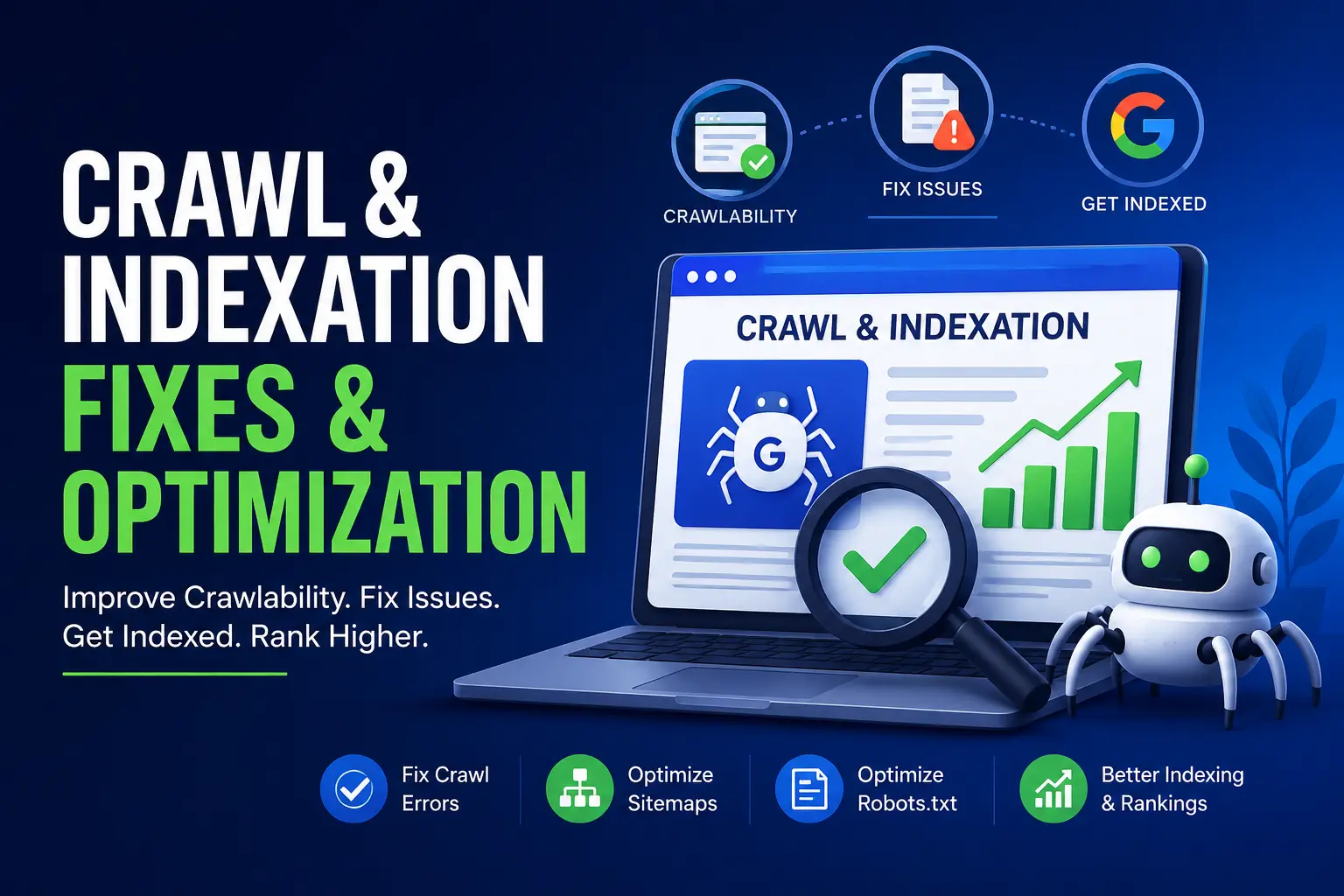
Is your Richmond business website not showing up on Google — even after months of hard work? The problem might not be your content. It could be that Google simply can’t find or read your pages.
Most business owners focus on writing blogs, building backlinks, and adding keywords — but completely ignore one of the most important parts of SEO: crawl and indexation. If search engines can’t crawl your website or index your pages, all your other SEO efforts go to waste. In this blog, we break down what crawl and indexation mean, what goes wrong, and how businesses in Richmond can fix and optimize these issues to finally start ranking on Google.
What Is Crawling and Indexation?
Before your website can show up on Google, two things must happen:
Crawling is when Google sends its bots (called “Googlebot”) to visit your website and read through your pages. Think of it like a librarian walking through your store and taking notes on everything inside.
Indexation is when Google saves and stores those pages in its database (called the “index”). Only indexed pages can appear in search results.
If either of these steps fails — your pages won’t rank. Period.
Common Crawl & Indexation Problems for Richmond Businesses Websites
Many Richmond-based businesses face these issues without even knowing it:
- Blocked Pages in Robots.txt: Your robots.txt file tells Google which pages to visit and which to avoid. A small mistake in this file can accidentally block Google from crawling your entire website.
- Noindex Tags Left On: During website development, pages are often tagged with “noindex” so they don’t show up in search engines while being built. If these tags are not removed before going live, Google will ignore those pages forever.
- Duplicate Content Issues: If Google finds multiple versions of the same page (for example, with and without “www”, or with HTTP and HTTPS), it gets confused about which version to index. This splits your ranking power and causes indexation problems.
- Slow Page Load Speed: Google has a “crawl budget” — a limited amount of time it spends on your website. If your pages load slowly, Google may leave before crawling everything, meaning some pages never get indexed.
- Broken Internal Links: If links on your website point to pages that don’t exist (404 errors), Google’s bots hit dead ends and stop crawling deeper into your website. This causes many important pages to be missed.
- XML Sitemap Errors: Your sitemap is a map you give Google to help it find all your pages. If it contains outdated URLs, broken links, or is missing pages entirely, Google may skip those pages.
- Thin or Low-Quality Pages: Google may choose not to index pages it considers low-quality, duplicate, or without enough useful content. This is especially common on e-commerce websites with hundreds of similar product pages.
Why This Matters Even More for Richmond Businesses
Richmond is a competitive local market. Whether you run a restaurant in Steveston, a real estate business near Aberdeen Centre, or a professional services firm on No. 3 Road — you are competing with hundreds of other local businesses for the same Google searches.
If your pages are not being crawled and indexed properly, even basic searches like “accountant in Richmond BC” or “Richmond plumber near me” will return your competitors instead of you.
Fixing crawl and indexation issues is not optional — it is the foundation of every successful local SEO strategy.
How to Fix Crawl & Indexation Issues in Richmond
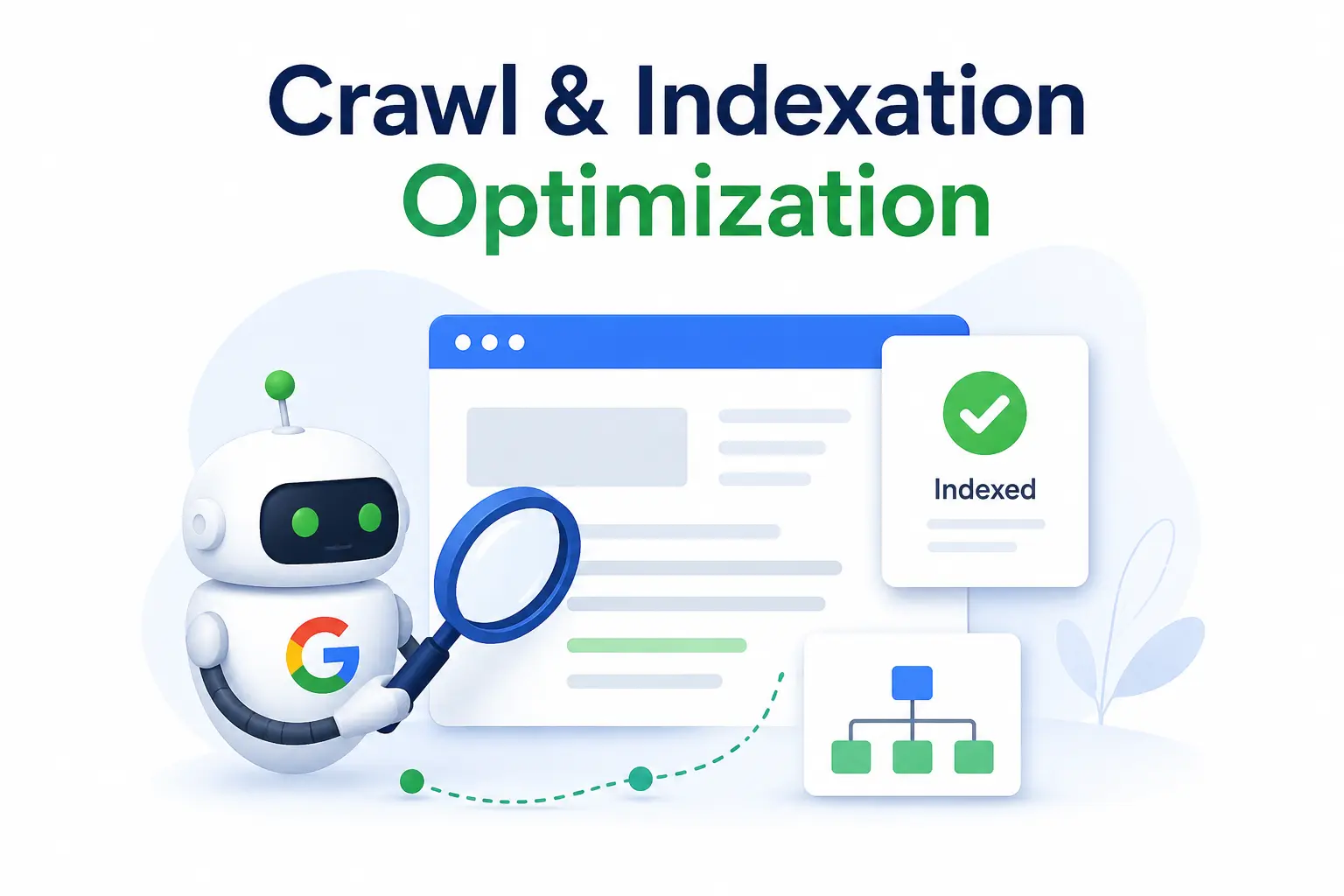
Here is a step-by-step approach to identify and fix these problems:
Step 1: Use Google Search Console
Google Search Console is a free tool that tells you exactly which of your pages are indexed, which are blocked, and which have errors. Start here. Go to the “Coverage” report to see which pages have issues and why.
Step 2: Audit Your Robots.txt File
Visit yourwebsite.com/robots.txt and check if anything important is being blocked. If you see “Disallow: /” — that means your entire website is blocked from Google. Fix this immediately.
Step 3: Check for Noindex Tags
Use a tool like Screaming Frog or Ahrefs to crawl your website and look for pages tagged with “noindex”. Remove these tags from any pages you want Google to find.
Step 4: Fix All 404 Errors and Broken Links
Use Google Search Console or Screaming Frog to find broken links. Either restore the missing pages or redirect the broken URLs to the correct pages using 301 redirects.
Step 5: Submit a Clean XML Sitemap
Create a proper XML sitemap that includes all the important pages on your website. Submit it through Google Search Console and make sure it stays updated as you add new content.
Step 6: Improve Page Speed
Use Google PageSpeed Insights (free tool) to find out how fast your pages load. Compress images, reduce unnecessary plugins, and switch to faster hosting if needed. Faster pages get crawled more often.
Step 7: Fix Duplicate Content with Canonical Tags
Add canonical tags to your pages to tell Google which version is the “main” version. This prevents duplicate content confusion and helps Google index the right pages.
Step 8: Build Strong Internal Linking
Make sure all your important pages are linked from other pages on your website. A page with no internal links is like a room with no door — hard to find. Create a logical structure where every important page is reachable within a few clicks.
Crawl & Indexation Optimization for Long-Term Results
Fixing crawl and indexation problems is not a one-time job. It is an ongoing process. Here is what smart Richmond businesses do to stay ahead:
- Regular crawl audits — at least once every 3 months
- Monitor Google Search Console weekly for new errors
- Update your sitemap every time you add or remove pages
- Review crawl budget regularly, especially if your website has hundreds of pages
- Keep your website fast — page speed is an ongoing task, not a one-time fix
- Audit after every website redesign — redesigns often accidentally break crawl settings
The Impact of Fixing These Issues
When Richmond businesses fix their crawl and indexation problems, the results can be dramatic:
- Pages that were invisible on Google start ranking within weeks
- Overall organic traffic increases as more pages get discovered
- Local search visibility improves for Richmond-specific keywords
- The rest of your SEO work (content, backlinks) starts delivering better results
- Your Google Search Console coverage report shows far fewer errors
Think of it this way — crawl and indexation fixes are like opening the front door of your store. Until you do it, no customer (or Google bot) can walk in.
FAQ’s
1. How do I know if my Richmond website has crawl or indexation problems?
The easiest way is to go to Google and type site:yourwebsite.com in the search bar. This shows all the pages Google has indexed from your website. If the number is much lower than the actual number of pages on your website — you likely have indexation issues. You can also use Google Search Console’s Coverage report for a detailed breakdown.
2. How long does it take for Google to index a fixed page?
After you fix a crawl or indexation issue, it can take anywhere from a few days to several weeks for Google to recrawl and re-index your pages. You can speed this up by submitting the URL directly through Google Search Console using the “URL Inspection” tool and clicking “Request Indexing.”
3. Can a slow website really affect crawl and indexation in Richmond?
Yes, absolutely. Google assigns a “crawl budget” to every website — a limit on how many pages it crawls during each visit. If your website loads slowly, Google uses up its crawl budget faster and may leave before crawling all your pages. This is especially important for larger Richmond business websites with many service or product pages.
4. Does every page on my website need to be indexed?
No. Not every page needs to be indexed. Pages like thank-you pages, admin pages, duplicate content pages, and privacy policy pages often do not need to appear in search results. The goal is to make sure all your valuable, traffic-driving pages (service pages, blog posts, location pages) are properly indexed — while keeping low-value pages out of the index using noindex tags.
5. What is a crawl budget and why does it matter for my Richmond website?
A crawl budget is the number of pages Googlebot will crawl on your website within a given period. Small websites usually do not need to worry about this. But for larger websites with hundreds or thousands of pages, managing your crawl budget becomes important. You can improve it by fixing broken links, removing duplicate pages, blocking unimportant pages via robots.txt, and improving overall website speed.
6. Should I hire an SEO professional for crawl and indexation fixes in Richmond?
If your website has basic issues (a few blocked pages, a missing sitemap), you may be able to fix these yourself using free tools like Google Search Console. However, for more complex issues — such as large-scale crawl errors, duplicate content across hundreds of pages, or technical redirects — it is strongly recommended to work with a local Richmond SEO professional. Technical SEO mistakes can make things worse if not handled correctly, and an expert will get results faster and more reliably.
Final Thoughts
Crawl and indexation fixes are the unsung heroes of SEO. While most people talk about keywords and backlinks, the businesses that dominate Google search in Richmond are the ones that have built a technically clean, fully crawlable, and properly indexed website as their foundation.
If you are a Richmond business owner who wants better rankings, more organic traffic, and a website that actually gets found on Google — start with a crawl and indexation audit. Fix what is broken. Optimize what can be improved. And watch your visibility grow.
Contact us today for a FREE Crawl & Indexation Audit and find out exactly why your website is not ranking — and how we can fix it fast.